Rifles and Carbines
of the Schutztruppe and Overseas Forces

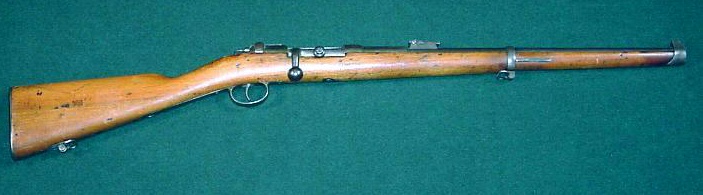
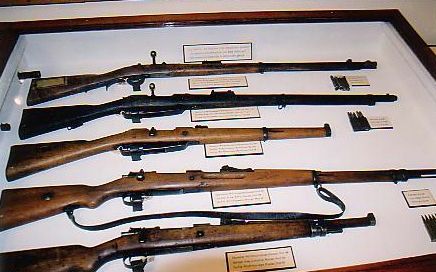
Display of Schutztruppe Rifles
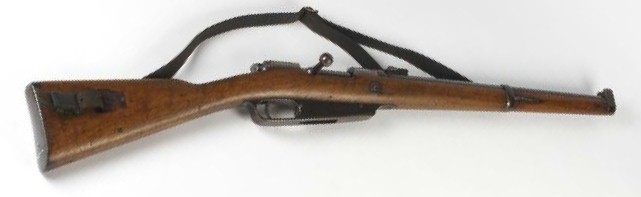
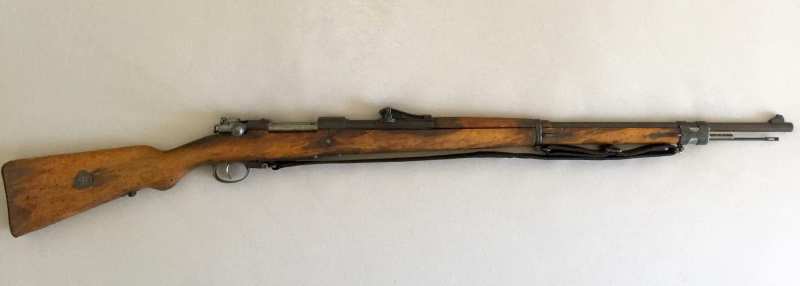
From top to bottom they are a Jägerbüchse 71, a Gewehr 88, its carbine equivalent the Kar88,
a Schutztruppen-Gewehr 98 and its carbine equivalent the Kar98.
Photo © P Buhler at the Swakopmund Museum, Namibia

The period of the late 19th and early 20th Centuries was a time of rapid development in the field of firearms. In just fifty years most European armies went from single shot muzzle loading percussion cap muskets in common use in 1850 to bolt action magazine rifles by 1900. Rival European armies were constantly trying to keep pace with the technological developments of their neighbours.

The German colonies used firearms from both ends of the technological scale, often they were issued obsolete stocks of firearms yet at other times were given the very latest trial models as they were more likely to get a chance to put them to the test in action. At times of shortage all manner of civilian hunting weapons, captured rifles or even hand made firearms were used in the German colonies.

The different types of rifle ("Gewehr") and carbine ("Karabiner") used in the colonies are photographed and described on this page.


German Rifles and Carbines

Most of the Colonial Overseas forces were issued with the standard Mauser rifles and carbines as issued to the regular imperial army, though often later than was issued to the regular army.

Mauser Gewehr 1871 (Gew71) Photo from WikiCommons

Calibre: 11mm
Length: 135cm
Barrel Length: 85cm
Weight: 4.5kg
Magazine: N/A Single Shot

The Franco-Prussian War of 1870-71 had shown that the French Chassepot 1866 Rifle was superior to the Prussian Dreyse 1848 Needle Gun in use at the time. In response the Prussian army adopted a new rifle designed by Wilhelm and Paul Mauser in 1867. It was one of the first successful bolt action rifles to use a metal cartridge. The Gew71 became the standard rifle of the German army during the 1870s and was still in use with army training and reserve units in the First World War. In the colonies it was used by the Polizeitruppe in Togo and the Imperial Navy (including the Marine Infantry in the 1870s and 80s).

Mauser Karabiner 1871 (Kar71) Photo © Bolt Action Rifles

Calibre: 11mm
Length: 100cm
Barrel Length: 50cm
Weight: 3.42kg
Magazine: N/A Single Shot

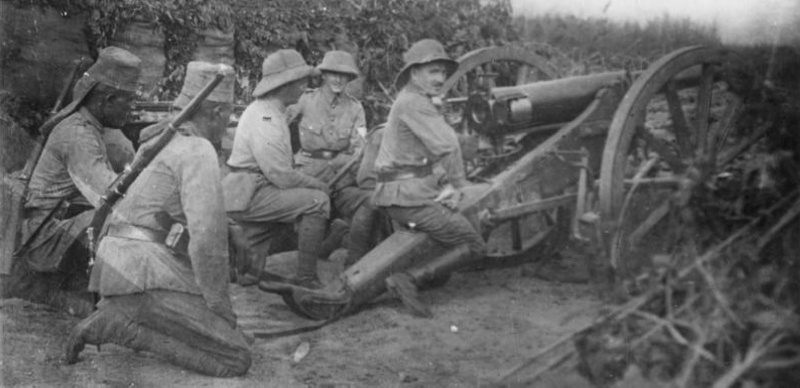
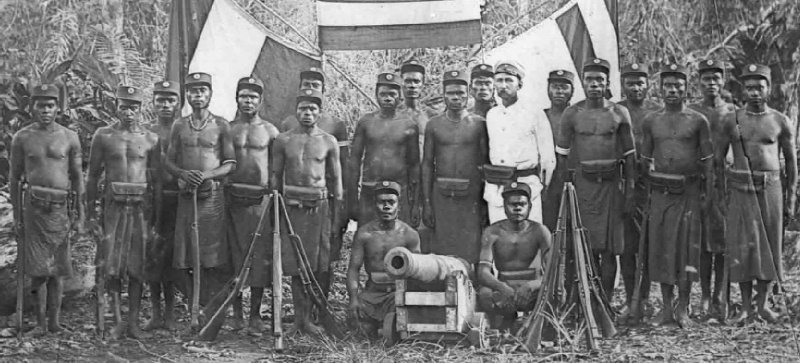
The carbine version of the Gew71 was identical in calibre and design but significantly shorter in barrel length. Like most carbines it had a curved bolt handle and was not designed to carry a bayonet. Period photographs show that during the 1880s and 1890s it was used by the early Schutztruppe in the South West Africa ("Truppe des Reichs-Kommissars"), the Polizeitruppe in Togo and New Guinea and the Swahili askaris of the German East Africa Company. Later photographs show East African askaris of the Schutztruppe artillery still armed with the Kar71 in 1914.
Recommended External Link - Bolt Action Rifles
 

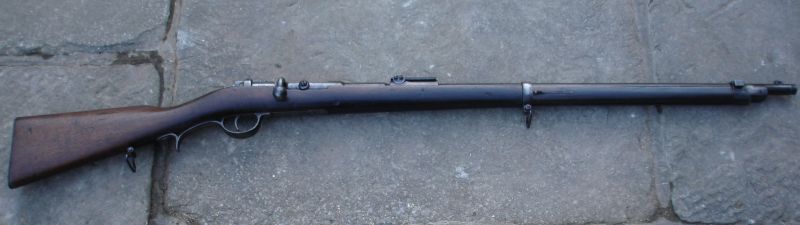
Mauser Jägerbüchse 1871 (JB71) Photos © Chris Wood

Calibre: 11mm
Length: 130cm
Barrel Length: 80.5cm
Magazine: N/A Single Shot

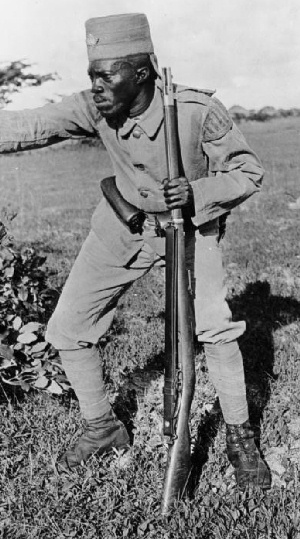
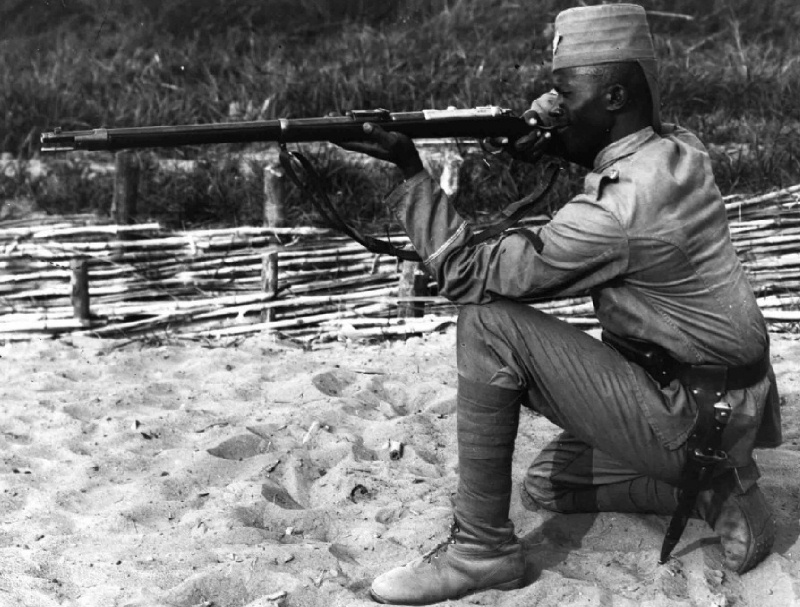
The Jägerbüchse was a light infantry version of the Gew71 and differed mainly in that it was 5cm shorter than the standard rifle. It was the main weapon of the askaris of the German East African Schutztruppe from the time of the Wissmanntruppe up until the First World War.

While its relatively large calibre made it ideal for use stopping charges of tribesmen, it was obsolete by comparison with the British, Belgian and Portuguese weapons of the First World War. Not only was it a single shot weapon but like the other 1871 series Mausers, it was particularly unhelpful in that its ammunition gave up a large flame and a cloud of smoke when fired thus revealing the firer's position by both night and day.

As well as being used by the askari of the East Africa, the JB71 was used by African troops in the Schutztruppe and Polizeitruppe of Cameroon and Togo prior to the introduction of the Kar98az. It also saw limited use by the South West African Schutztruppe and Landespolizei, again prior to the introduction of the Gew98 and Kar98.

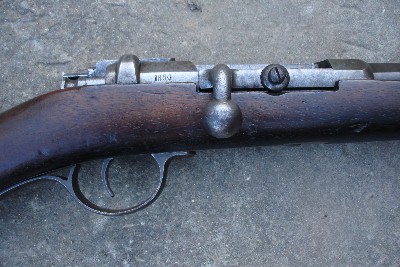
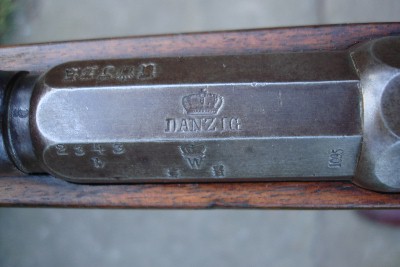
This example has a stamp in the butt showing an Imperial eagle and "ORTSPolizeibehörde Bethanien 359".  This would indicate that it was used by a Schutztruppe police unit at Bethanien in South West Africa, prior to the formation of the South West African Landespolizei in 1905. Note also the replacement (or altered) curved bolt, whereas most JB71 rifles (and indeed most German rifles in general) had straight bolts. See South West African Jägerbüchse Page for details.

Mauser Gewehr 1871/84 (Gew71/84) Photo from Adams Guns / WikiCommons

Calibre: 11mm
Length: 135cm
Barrel Length: 85.5cm
Magazine: 8 round tubular magazine

The Russo-Turkish War of 1877-78 had shown that the Turkish Winchester repeat firing rifles proved superior to Russian single shot weapons. In 1884 the German army were issued their first repeating rifle in form of an upgrade to the existing Gew71 that included an eight round tubular magazine designed by Alfred von Kropatschek running under the barrel of the gun. As well as being introduced to the regular German army, these modified riles were issued to the early Schutztruppe in South West Africa, the Imperial Navy and the Marine Infantry.
 
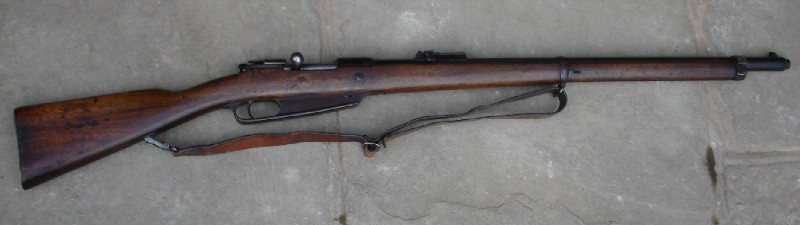
Kommissions Gewehr 1888 (Gew88) Photos © British Collector

Calibre: 7.92mm
Length: 124cm
Barrel Length: 74cm
Weight: 3.8kg
Magazine: 5 round clip magazine

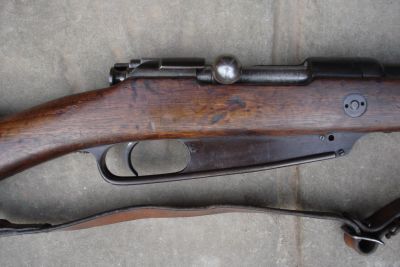
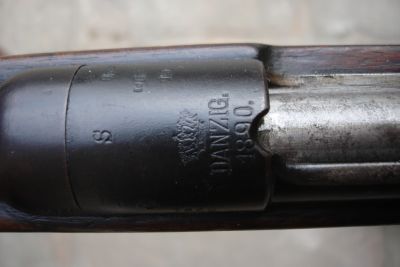
The French army adopted a Lebel rifle firing smokeless ammunition in 1886. This new smokeless propellant enabled smaller calibre bullets (8mm in the case of the Lebel) to be fired at greater accuracy over longer ranges. This prompted the German High Command to again update their infantry rifle. The Gew88 was designed by an army commission and used ideas from several other rifles of the time including the Lebel, the Austrian Mannlicher and earlier German rifles such as the Gew71.

The Gew88 was issued to the German army in the 1890s and was still in limited use in 1914. It was also used by the Imperial Navy and saw limited use with the Schutztruppe of South West Africa and East Africa. 
Recommended External Links - Texas Tradng Post, Commission Rifle and Gew88 

Kommissions Karabiner 1888 (Kar88) Photo from Adams Guns / WikiCommons

Calibre: 7.92 mm
Length: 95cm
Barrel Length: 48.8cm
Weight: 3.1kg
Magazine: 5 round clip magazine

The shorter carbine version of the Gew88 differed from the rifle in that it had a curved and flattened bolt lever. Like the Kar71, it was not designed to carry a bayonet. Period photographs show that it was used in limited numbers by the Schutztruppe of South West Africa, East Africa and Cameroon. At least one photograph shows it being used by the East Asian Cavalry. The photograph was taken before their departure for China and they may have been replaced by the Kar98 before embarkation.

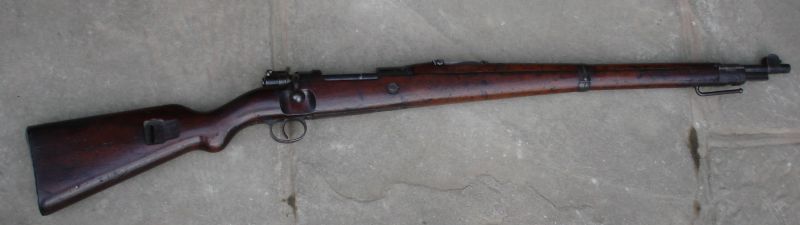
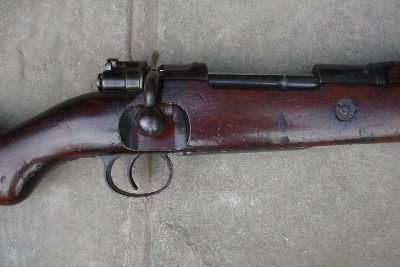
Mauser Gewehr 1898 (Gew98) Photos © British Collector

Calibre: 8mm
Length: 125cm
Barrel Length: 74cm
Weight: 4.09 kg

Magazine: 5 round clip magazine

In 1898 the German army adopted a new Mauser rifle. This latest design had several improvements over previous Mausers and the Gew88 with an internal magazine, better safety features and an improved bolt action. It remained the main weapon of the German Infantry up to and during the First World War.

The first issue of the Gew98 for active service was to the East Asian Expeditionary Corps prior to embarkation for China. Period photographs show that it was used by the later East Asian Occupation Brigade, the Schutztruppe of South West Africa, Imperial Navy and Marine Infantry.
Recommended External Link - The Official Mauser Website 


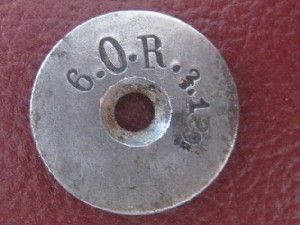
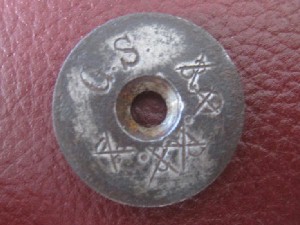
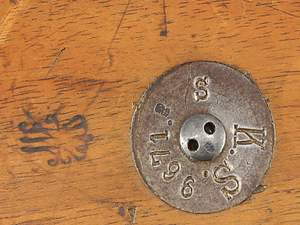
The rifle butt disc from a Gew98. The recent markings on the left are for the 6th East Asian Infantry Regt, 3rd Battalion, 1st Company, weapon number 29. The 6th East Asian Infantry Regt ("6. Ostasiatische Infanterie Regiment") were part of the 1900 East Asian Expeditionary Corps. The previous cancelled markings on the right are from the 3rd company of the Prussian Guards Rifles Battalion ("Garde Schützen Batallion"). Photos © Gilles Sigro


Mauser Schutztruppen-Gewehr 1898 (Gew98S)
Photo © P Buhler Swakopmund Museum, Namibia

Calibre: 8mm
Length: 125cm
Barrel Length: 74cm
Weight: 4.09 kg

Magazine: 5 round clip magazine

A variant of the Gew98 known as the Schutztruppen-Gewehr 98 (Gew98S) was also used in South West Africa. It had a bent bolt handle and the rear sight started at 200 meters instead of 400 like the standard Gew98. The rifles were probably modified from standard rifles at an ordnance workshop in South West Africa. Standard Gew98 rifles were also widely used by the Schutztruppe in South West Africa.
Recommended External Link- Discussion on the Schutztruppe Gewehr on the Axis History Forum

Mauser Karabiner 1898 (Kar98)
Photo
© P Buhler Swakopmund Museum, Namibia

Calibre: 8mm
Approx. Length:
95cm
Barrel Length: 43.5cm
Magazine: 5 round clip magazine

There were several carbine variations on the Gew98 rifle (such as the later Kar98az in common use in the First World War and the K98k in common use in the Second). The original carbine is usually known as the Kar98 and was produced from 1899 until 1908. It was designed for cavalry and other mounted troops and did not carry a bayonet. Period photographs show that it was used by the South West African Schutztruppe and the East Asian Cavalry and Artillery.

Mauser Karabiner 1898az  (Kar98az) Photos © A Private Collector
Calibre: 8mm
Length: 109cm
Barrel Length: 59cm
Weight: 3.50 kg
Magazine: 5 round clip magazine

In 1908 a new variant of the Mauser carbine was introduced with several design improvements such as a bayonet lug and stacking hook, an elongated barrel and a turned-down bolt handle with a corresponding recess in the stock. This was known as the Karabiner Model 1898az ("Mit Aufpflanz und zusammensetzvorrichtung") to describe the added bayonet lug and stacking hook.

This version remained in production throughout the First World War. As well as being issued to mounted troops it was also in use with specialist units such as machine gunners, mountain troops and storm troops. Period photographs show that it was used by the Schutztruppe of East Africa and Cameroon, as well as German units in Macedonia, Palestine and Georgia during the First World War.

Recommended External Link - Gunboards Forum for a more complete discussion of Mauser Carbine variants

Foreign Rifles in German Colonial and Overseas Service

At times of shortage all manner of imported, captured, civilian or even hand made firearms were used in the German colonies. At other times trials were made of foreign weapons by the colonial forces. Below are some of the captured and miscellaneous rifles known to have been used in small quantities in the colonies.

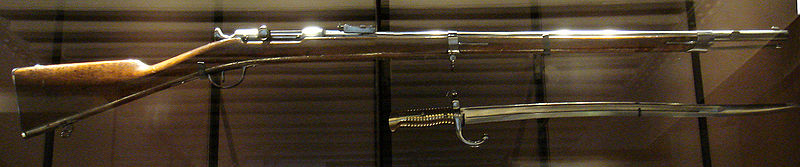
French Chassepot 1866 Rifle Conversion Photo by PHGCOM  from  the Musée de l'Armée, Paris / WikiCommons

Calibre: 11mm
Length: Originally 131 cm but shortened to carbine length in German service.
Barrel Length: Originally 79.5 cm
Weight: Originally 4.635.kg
Magazine: N/A Single Shot

The Chassepot 1866 breech loading bolt action rifle was the main weapon of the French army during the Franco Prussian-War. The photograph above shows one of the original French rifles, rather than the later German converted carbines. It is shown with a French Yagatan bayonet.

About 150,000 of these rifles were captured during the Franco-Prussian War and many were converted to carbines by the Prussian War Ministry and to use the 11mm Mauser brass cartridge rather than the original French paper cartridge of the same calibre. These were used by German cavalry and artillery units until the early 1880s. In 1887, fifty of these weapons were sold to the German New Guinea Company to arm the first Polizeitruppe.
Recommended External Link - Wikipedia Chassepot

American Remington Rolling Block Rifle Photo from Adams Guns / WikiCommons

Calibre: 11mm
Length: 128cm
Barrel Length: 90cm
Weight: 4.2kg
Magazine: N/A Single Shot

Wissmann's first Sudanese askaris were photographed in Cairo in 1889 with their old Remington Rolling Block Rifles with Yagatan bayonets from the Anglo-Egyptian army. It is not known if these rifles were still in use by the time these askaris reached East Africa or whether they had all been replaced by the Jägerbüchse 71. The photograph above shows a Danish made Remington from 1883 with a Yagatan bayonet.
Recommended External Link - Remington Rolling Block Page at Military Surplus Guns

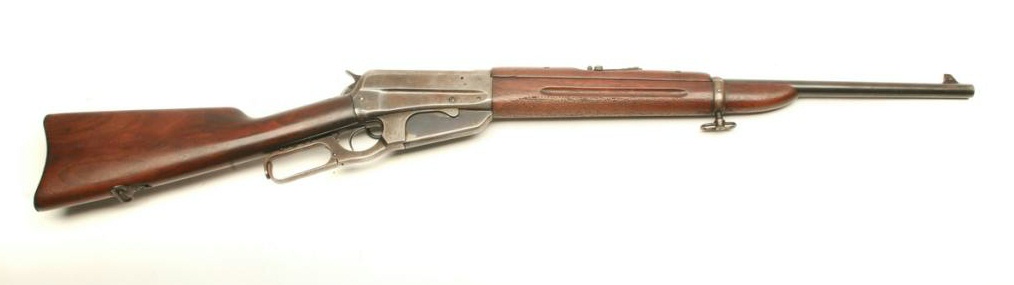
American/Belgian Winchester 1895 Carbine Photo © ArmsBid

Calibre: 7.62mm
Approx. Length:
100cm
Barrel Length: 56cm
Magazine:
5 round magazine

The American-designed and Belgian made Winchester lever action carbine was considered for use by the German army. In 1912 the carbine was issued in test quantities to the 17th Saxon Lancer Regiment ("Ulanen-Regiment "Kaiser Franz Josef von Österreich, König von Ungarn" (1. Königlich Sächsisches) Nr. 17") and also to the South West African Schutztruppe for evaluation. It was not taken up as a full time replacement to their Mauser carbines.
Recommended External Link -
World Guns

Austro-Hungarian Steyr-Mannlicher 1895 Photo by Vorb11 from WikiCommons

Calibre: 8mm
Length: 127.2cm
Barrel Length: 76.5cm
Weight: 3.8 kg
Magazine: 5 round clip magazine

This was the main rifle used by the Austro-Hungarian army and navy in the First World War. It was designed by  Ferdinand Ritter von Mannlicher and produced by Steyr-Mannlicher. It was a bolt action rifle using a refined version of von Mannlicher's revolutionary straight-pull action. It was also issued to members of the Marine Detachment Skutari when they fought alongside Austro-Hungarian troops in Bosnia at the outbreak of the First World War. This may have been to facilitate ammunition supplies within the Austrian command.
Recommended External Link - World Guns

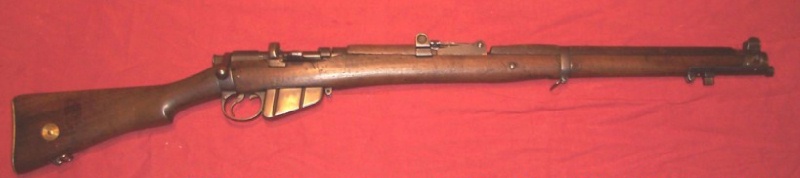
British Lee Enfield MkIII Rifle (SMLE) Photo by Coggansfield at WikiCommons

Calibre: 7.7mm (British .303 inch)
Length: 110cm
Barrel Length: 63.5cm
Weight: 4 kg
Magazine: 10 round magazine made up of two 5 round clips

The Lee Enfield was the standard rifle issued to the British army during the First World War and with small modifications also served throughout the Second World War. It was the fastest bolt action rifle of its time. These rifles were captured and re-used in large quantities by the Schutztruppe of German East Africa. 455 were captured at the Battle of Tanga in November 1914 alone.
Recommended External Link - Lee Enfield Rifles

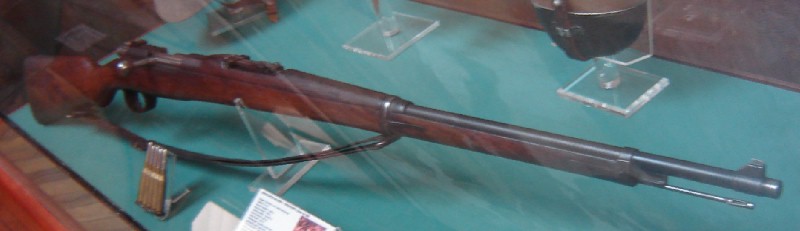
Portuguese Mauser-Vergueiro 1904 Rifle Photo by C Dale at the Portuguese Military Museum, Lisbon

Calibre: 6.5mm
Approx Length: 123cm
Barrel Length: 73.5cm
Magazine: 5 round clip magazine

The Mauser-Vergueiro was designed by a Portuguese army officer, José A. Vergueiro, based on the Mauser Gewehr 98. It was the standard infantry rifle of the Portuguese army and colonial forces during the First World War. Numbers of them were also used by the South African army in the First World War. After the Schutztruppe of German East Africa invaded Portuguese territory in 1917 they captured and used the rifles in large numbers. A shorter carbine version was also produced which may well also have fallen into Schutztruppe hands on occasion.

The following first hand description of three askaris in 1917 is taken from "Blockade and Jungle" by Christen P Christensen (See Book Reviews Page) and is typical of askaris from the later war period- "I had a look at our reinforcements...they were three askaris. The man on one side of me had ... a long barrelled, small bore Portuguese rifle, which gave a peculiar sharp, ringing crack. He was a veteran....The second third of our relieving troops....was a good man too, another veteran. He had still ... an old fashioned '71 rifle, which made a lot of smoke and gave out a dull roar like a shot gun....The man beside ...was shooting briskly and vigorously with an English rifle."


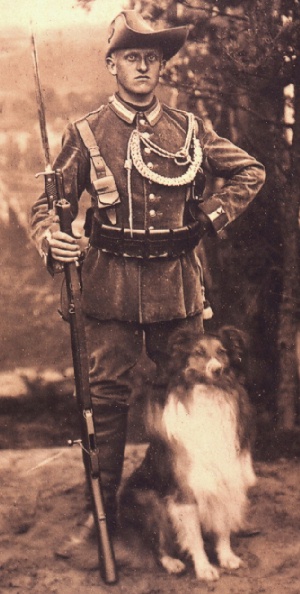
German Overseas Forces and their Rifles


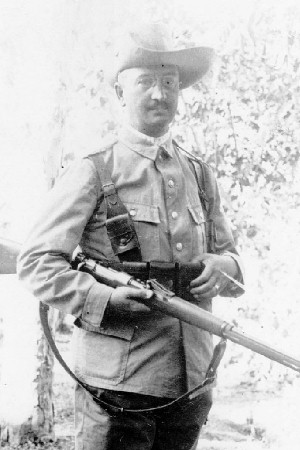
South West African Schutztruppe Reiter
With a Gew88 rifle and S98 bayonet
 (which would not have fitted the rifle properly)
Photo © Guido Welk


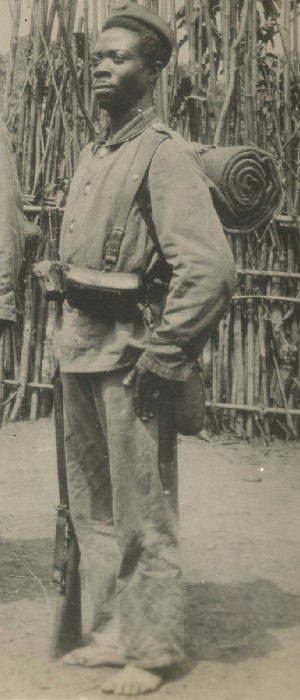
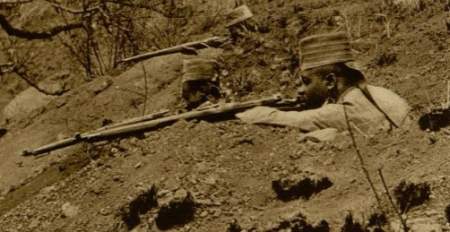
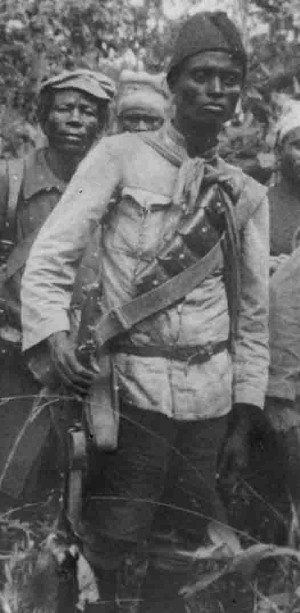
East African Schutztruppe Askari
With a JB71 rifle
Photo from WikiCommons

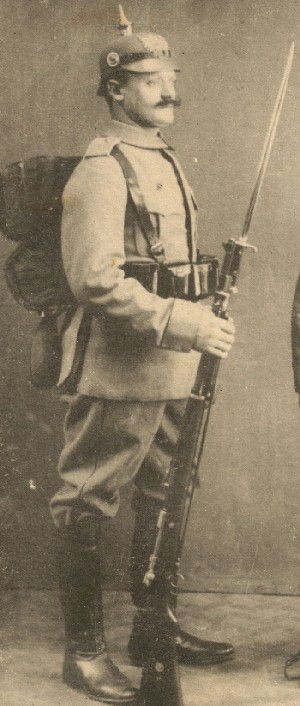
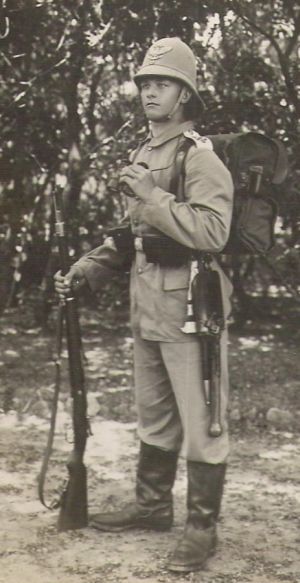
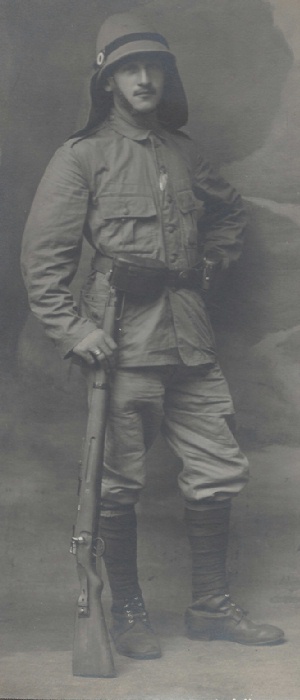
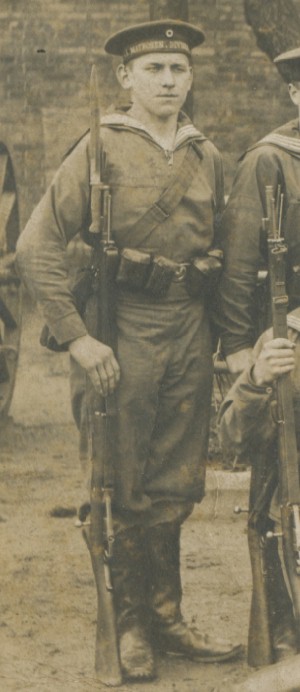
Seesoldat Wilhelm Hunstiger
of the III. Seebataillon in Tsingtau
With a Gew98 rifle and S98 bayonet
 Photo from WikiCommons
   

South West African Schutztruppe
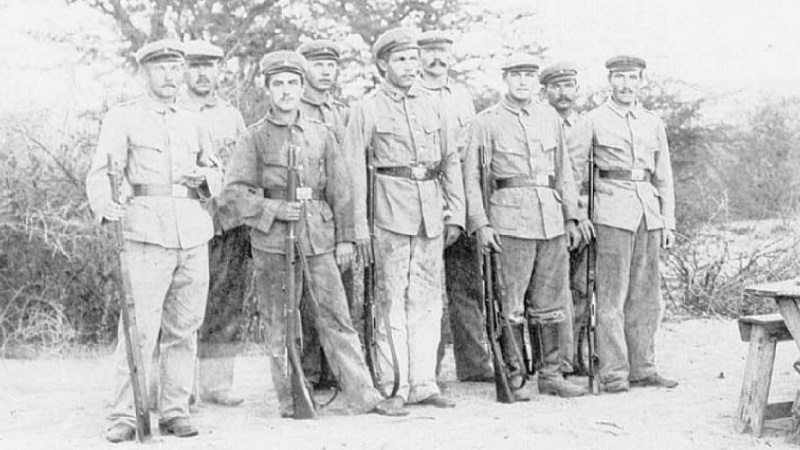
The very first German troops in South West Africa, the Truppe Des Reichs-Kommissars were from 1888, armed with the Kar71, and from 1890 with the Gew71/84. Reinforcements to the Schutztruppe in 1894 brought the Kar88.

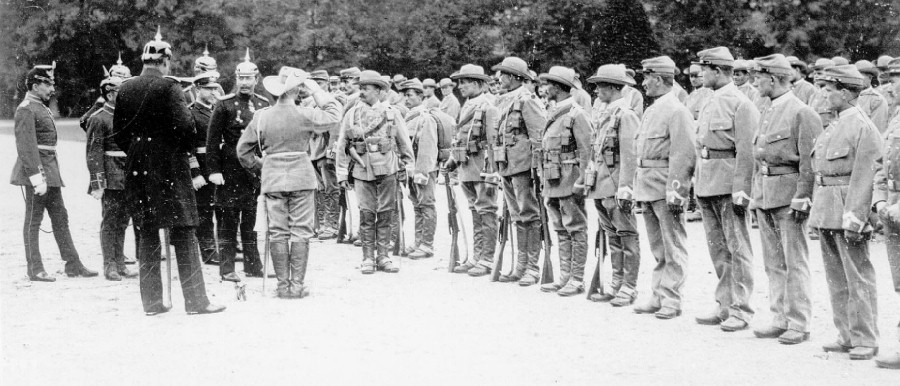
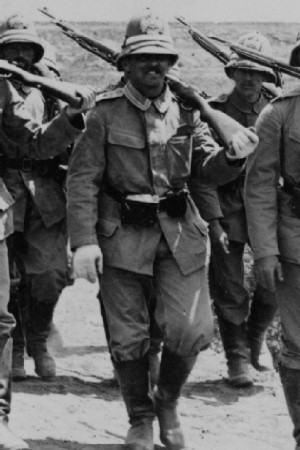
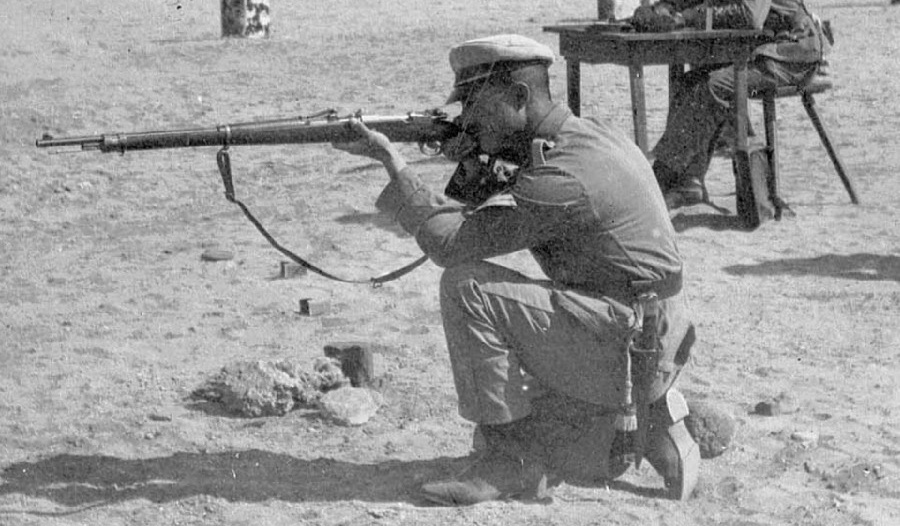
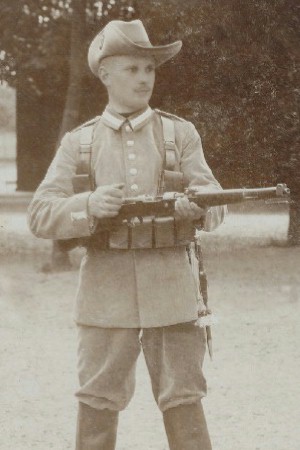
Further reinforcements sent to fight the Herero Rebellion in 1904 were armed with the Gew98. Curiously several posed studio photographs show them carrying the Gew88 prior to deployment in Africa, sometimes with ill fitting bayonets (see above). It is not sure if they trained with the Gew88 and were only issued the Gew98 shortly before embarkation or more likely these rifles are props owned by the photographic studio. 

From the period of the Herero Rebellion to the First World War the Gew98 (and its variants the Gew98S and for machine gunners and artillery the Kar98) remained the main weapons of the Schutztruppe.

There is also evidence either in period documents, modern collections or photographs that the Gew 88, JB71, Gew91 and even some American/Belgian Winchester 1895 carbines were used in limited numbers by the South West African Schutztruppe.

South West African Landespolizei
The Landespolizei were armed mainly with pistols. The 1883 Reichsrevolver and the Roth-Sauer Pistol were both in common use, the Luger P08 was also issued sometime after 1912.

Rifles were sometimes carried. Records in "Unter dem Kreuz des Südens" show the Landespolizei had a collection of different types of standard German rifles in their possession- Gew71, Gew88, Kar88, Gew98, Gew98S and varieties of Kar98.

East African Schutztruppe
The first askaris of the German East Africa Company were issued with the Kar71. The first Sudanese askaris of the Wissmanntruppe still carried the old American Remington Rolling Block Rifles from their previous Anglo-Egyptian service. These were soon replaced by the Jägerbüchse 71 and this remained the main weapon used by the Schutztruppe until the First World War. Other period photographs prove that small numbers of Kar71, G88 and Kar88 were also used by the askaris on occasion.

It had been intended to re-equip them all with the Kar98az but only the 1., 4., 8., 10. and 13. Feldkompagnien and German NCOs in the Schutztruppe had received them before war broke out in 1914. More Kar98az were brought to the colony during war on blockade running ships but most of the Schutztruppe's new weaponry came from captured British and Portuguese stocks.

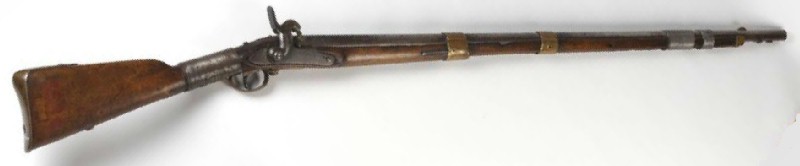
Hunting rifles and obsolete weapons also used by the Schutztruppe and their auxiliaries. On display in the Imperial War Museum in London is an old .60 inch percussion cap musket that was captured from German forces in East Africa during the First World War. The musket has a very interesting history having been sold by the United States to France after service in the American Civil War 1861-65, captured by the Prussians in the Franco-Prussian War 1870-71 and was still in service in the 1914-18 war.

East African Polizeitruppe
Photographs show the Polizeitruppe of East Africa using the JB71.

Cameroon Schutztruppe
The Cameroon Schutztruppe were issued the JB71, though photographs also show the use of the Kar88 by mounted troops. By 1914 most of the Schutztruppe had been re-armed with the Kar98az, leaving stocks of the old JB71 for new recruits in wartime. According to Hew Strachan's "First World War in Africa" Cameroon had 3,861 rifles of the modern 1898 type with two and a quarter million rounds and only 2,920 rifles of the 1871 model with half a million rounds. Due to the shortage of ammunition, spent rounds were reloaded with locally made gunpowder (or using Nitro-glycerine requisitioned from civilian mining operations) with varying results and original 1898 rounds were prioritised for use in machine guns. Attempts were also made at locally made rifles but their unreliability made them extremely unpopular.

Cameroon Polizeitruppe
Photographs show the Polizeitruppe of Cameroon using the JB71, these weapons are probably included in Strachan's figures above. Other rifles may have been issued in their formative years.

Togo Polizeitruppe
The first weapons issued were Kar71 carbines, these were replaced from 1888 onwards with the Gew71 and the JB71. By 1914 most of the Polizeitruppe had again been re-armed with the Kar98az, leaving the stocks of 1871 model rifles for use by Polizeitruppe reservists recalled to arms in the First World War.

Hunting rifles may also have been used by Germans called up in the Togo campaign during the First World War. The British commander Captain F.C. Bryant, made an official complaint to the German acting governor Major von Doering, that dum-dum bullets and hunting rounds were used against his men. Von Doering did not deny their use but said that if such weapons were used they were done so without his knowledge- "It was alleged that my troops have made use of certain bullets which do not conform with the stipulations of the Geneva Convention (sic- it was actually the Hague Convention of 1899, declaration III) ... I know nothing of this matter; and that, officially, only bullets covered with jackets as well as regulation solid lead bullets have been issued as equipment. If bullets which are contrary to regulations have indeed been found on individuals, then I would submit that we have never reckoned with a war in Togoland, and that those liable for military service went on active service without any special plan of mobilisation, partly direct from their civil posts- thus the exchange of any irregular sporting cartridges, which they may have had, may perhaps in a few cases have been impossible. I express my regret on account of the incident in question." (as quoted from P430 of the "Official History of the War- Military Operations in Togoland and the Cameroons" by FJ Moberley, published by Battery Press)

New Guinea Polizeitruppe
The first local police soldiers of the German New Guinea Company were armed with converted French Chassepot carbines. These were soon replaced by the Kar71. Later photographs most commonly show them armed with the Gew88.

Samoan Polizeitruppe and Fita-Fita
I have not seen many period photographs of the Samoan Polizeitruppe and Fita-Fita armed at all. The few that do exist seem to show the Gew71 in use with possibly a Gew88 used in another.

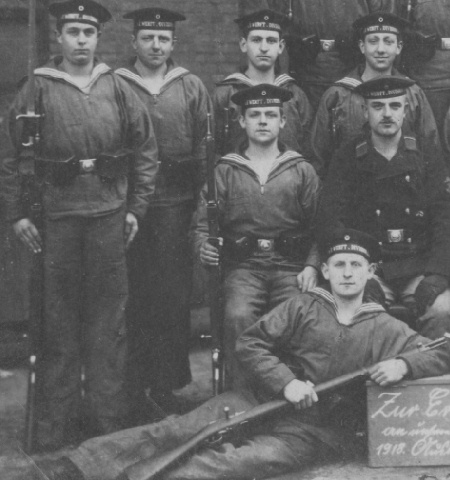
Imperial Navy
The Imperial Navy were issued the same rifles as the army Gew71, Gew71/84, Gew88 and later the Gew98. From 1916 the army was prioritised over the navy for the use of rifles and wartime photographs show the navy using all manner of obsolete or captured weapons for depot duties including the Gew71, Gew71/84 and the Russian Mosin-Nagant rifle on depot duty during the First World War.

Marine Infantry- Seebataillone
The Füsilier 1860 rifle was issued to the Prussian Seebataillon from 1862. It was a shorter version of the Dreyse Needle Gun. These were presumably replaced by the Gew71 in the mid 1870s and by the Gew71/84 in the 1880s, although photographic evidence is scarce.

Photographs from the 1890s show the use of the Gew88. The Gew98 was first used by the Marine Expeditionskorps to China in 1900 and then to South West Africa in 1904. It was also issued to the III. Seebataillon in Tsingtao by the early 1900s. Mounted troops carried the Kar88 or Kar98.
East Asian Army
The first chance to put the Gew98 into action was the Boxer Rebellion. The East Asian Expeditionary Corps was issued both the Gew98 and Kar98 (for mounted personnel) and these remained in use until the disbandment of the East Asian Detachment in 1909.

Some photographs show members of the East Asian Expeditionary Corps on their formation in Germany with older rifles and carbines such as the Gew88. It appears from later photographs that these weapons were replaced before deployment to China.

Asienkorps and Other Army Units in the Ottoman Empire
Photographic evidence shows them commonly using the Gew98 or Kar98az.

Recommended External Links-
Mauser Waffen
Military Rifles
Bolt Action Rifles
Turk Mauser
Military Surplus Guns
World Guns
Texas Tradng Post
Commission Rifle
Gew88 
Royal Electrical and Mechanical Engineers Museum
Cruffler Trivia - with lists of Imperial Army weapon unit markings


East Asian Cavalry Reiter 1900
With a Kar88 carbine and S71 bayonet which would not have fitted on the carbine.
Photo © Joe Robinson


South West African Schutztruppe Reiter
With an unusual Kar88 Artillery carbine, known as the G91 with stacking rod. His bayonet is the S71/84 which would not have fitted the carbine.
Photo © Sam Wouters


East Asian Infantryman c1904-09
with a Gew98 rifle and S98 bayonet
Photo © Joe Robinson


Soldier of the Cameroon Schutztruppe
with a JB71 rifle and an S71/84 bayonet

Photo © Joe Robinson


Matrose from the I Matrosen Division,
Germany 1917
with a Russian Mosin Nagant rifle which has an adaptor allowing it to hold German 1898 bayonets such as the S84/98nA seen here.
Photo © Sam Wouters


Machine Gunner or Artilleryman from the Pascha I or II Expeditions c1916-18
with a Kar98AZ carbine
Photo © Joe Robinson


Thanks to Chris Wood, Paul Scarlata, Bruce Swanton, Joe Robinson, Sam Wouters, S Schepp and P Buhler for their help on this page.


Please contact me here if you have more information or photos on this topic. 

Back to Main Menu for German Colonial Uniforms