|
THE KAHE RAILWAY GUN
"The barrel was
filled with dynamite and it blew up the gun so
effectively that the entire barrel was torn at its
thickest point"
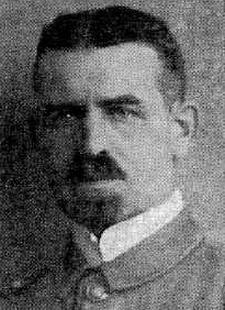
Korvetten-Kapitän a.D. Werner Schönfeld, Commander
of the Kahe Gun
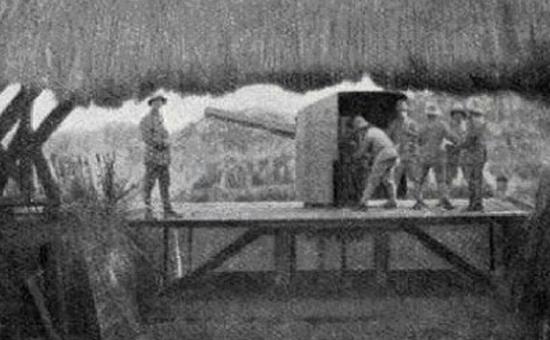
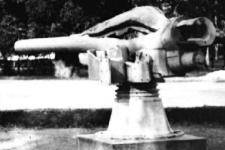
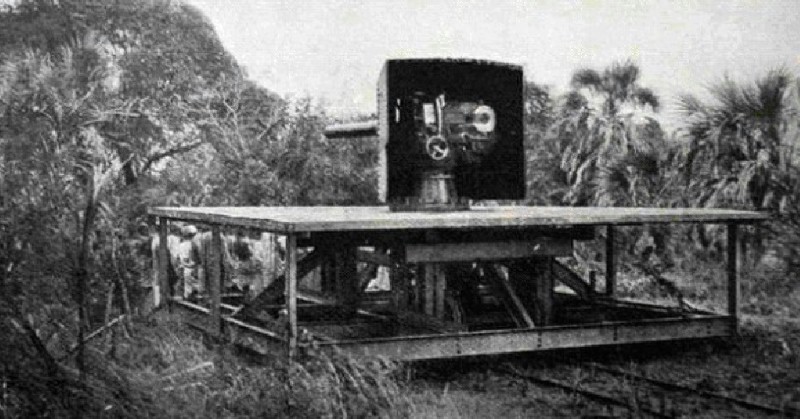
The Railway Gun at Tanga c1915-16
Photo originally published in "Geraubtes
Land" by Werner Schönfeld
Deployment
to Tanga
In
November 1914 the German Schutztruppe under
Oberstleutnant von Lettow-Vorbeck decisively
defeated a landing by British and Indian troops at
Tanga and captured much needed supplies, weapons and
ammunition in the process. To prevent another
British landing attempt, two of the Königsberg
10.5cm guns were deployed to Tanga after their being
salvaged from the Rufiji and repaired at Dar Es
Salaam.
The
first of these guns arrived at Tanga in August 1915
(the second being the gun later captured at Masasi
which was arrived in Tanga in October 1915). This
first gun was commanded by Korvetten-Kapitän a.D. Werner Schönfeld,
a former naval artillery officer who had since
become a plantation owner in German East Africa.
Von
Lettow-Vorbeck described his first meeting with
Schönfeld shortly before the outbreak of war-
"Close by was the plantation of Lieutenant-Commander Schoenfeld (retired) who hospitably offered
us a glass of very fine Moselle wine, and did so
with a military tone like a word of command which
even then characterised him as the energetic leader
who was later to defend the mouth of the Rufiji
River against a superior enemy with such
stubbornness."
(Quotation from
P7 'Reminiscences of East Africa' by Paul von
Lettow-Vorbeck, Naval &
Military Press Ltd 2004)
The gun,
with its turret and
its original pivot stand were set on a wooden platform
on a steel construction mounted on rails which ran
from Putini overlooking Tanga Bay to
Mtimbwani overlooking
Manza Bay, both to the North of Tanga.
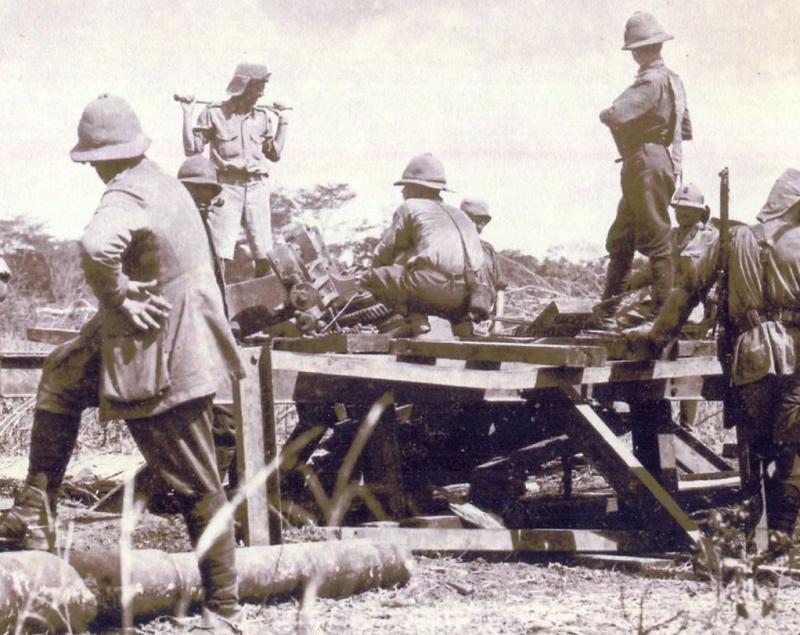
Although it was mounted on rails, it did not have a
steam engine to power it and instead, large numbers
of African porters were needed to tow it up and down
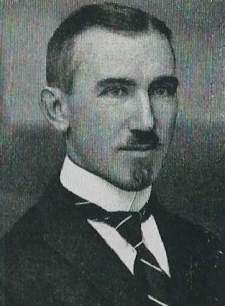
the tracks. Hermann J Müller, who served in
the gun's crew recalled- "The gun at Putini was
mobile on a 6km long railway track in order to fire
up Tanga and Manza
Bay simultaneously."
(Quotation from P34, Vol 3
"Kriegserinnerungen aus DOA
1914-1917" by Hermann J Müller, Privately Published)
In
the event, the presence of the guns at Tanga and the
memory of their previous failed attempt at a
seaborne invasion there deterred the British from
trying the same tactic again.
Meanwhile to the North, along the frontier with
British East Africa the Germans had not only held
the frontier but raided into British territory
cutting communication lines and blowing up the
Nairobi-Mombasa railway in several places.
The
Battles at Longido and Jassin had held the German
frontier but at a heavy cost.
With little hope of reinforcements from Germany, von
Lettow-Vorbeck could not afford more costly defences
of territory and would gradually have to cede
territory in future. By
early 1916 the Germans were also feeling the
effects of the
blockade and faced shortages of fuel, medicine and ammunition.
At
this point all the other overseas German
possessions had already fallen to the allies. The smaller
territories in of German Samoa, New Guinea, Togo and
Tsingtao in China had fallen in 1914, with the
larger colonies of German
South West Africa and Cameroon falling in 1915 (although a
small garrison held out in Northern Cameroon until
February 1916).
German East Africa was now the only German colony
remaining and more importantly it still held its
borders largely intact.
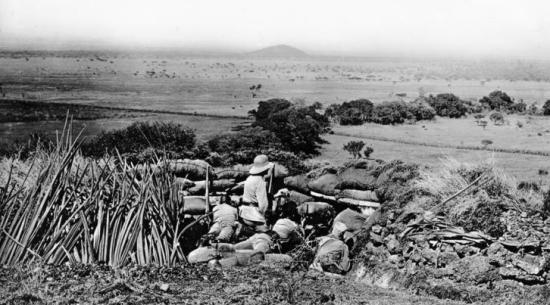
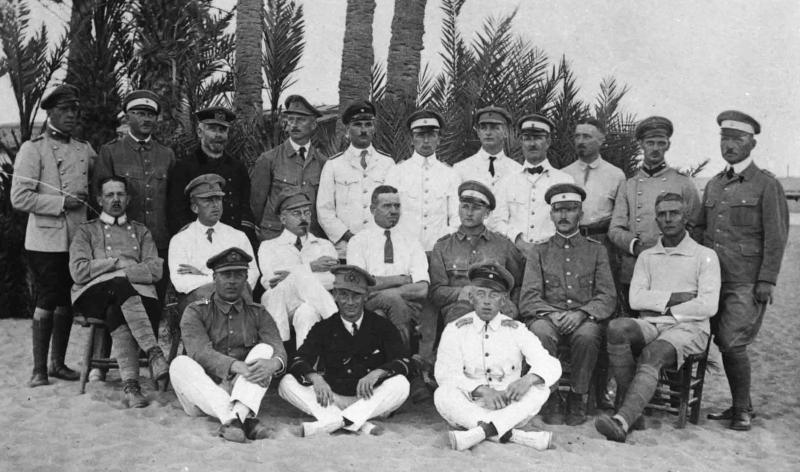
German Positions on
the Northern Front, German East Africa c1916
Photo by Walther Dobbertin from Bundesarchiv /
WikiCommons
Smuts' Offensive on the
Northern Front
The
allies meanwhile had only grown in strength. The Belgians
had built up in the West, the British in the North
and most importantly large numbers of South African
troops freed up by the surrender of German South
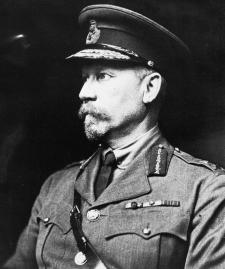
West Africa had started to arrive under General
Smuts, who from
23 February 1916 was promoted to temporary
Lieutenant Colonel and took command of the British
and now South African forces in British East Africa
with the intention of an imminent invasion of German
territory.
These plans did not go unnoticed by the
Germans and in early
March 1916, it was decided to move the Königsberg
gun at Putini, from Tanga to the
Northern Front. Ludwig Boell
who served in the East African
Schutztruppe wrote-
"To remedy the
especially painful perceived lack of long-range guns
(on the Northern front), the command decided... to
weaken the coastal defence. An 8.8cm and a 10.5 cm
gun (the gun later captured at Mkuyuni) were
transported from Dar Es Salaam to the Northern
railway and a 10.5cm gun from Tanga made its way to
Kahe. The first two guns were on carriages made in
the colony, while the latter had to be permanently
installed."
(Quotation from P167 and footnote
"Die Operationen in Ostafrika im
Weltkrieg 1914-1918" by Ludwig Boell, Verlag Walter
Dachert, Hamburg 1951)
Paul
von Lettow-Vorbeck, the commander of the
Schutztruppe explained the position in his memoirs-
"From
Tanga, one of the Königsberg guns mounted there was
brought up by rails. The reader will rightly ask why
this had not been done long before. But the gun had
no wheels and fired from a fixed pivot, so that it
was very immobile. It is therefore understandable
that we delayed bringing it into action until there
could be no doubt as to the precise spot where it
would be wanted"
(Quotation from
P111 'Reminiscences of East Africa' by Paul von
Lettow-Vorbeck, Naval &
Military Press Ltd 2004)
The
permanent installation at Kahe took the shape of a
newly laid railway track and the reconstruction of
the old Tanga railway mounting construction, though
this time perhaps without its original naval turret
as later photographs of the remains of the gun show
no signs of a turret being present. Hermann
Müller again recalled-
"We
were ordered to bring the gun to Kahe on the
Northern Railway, about 30km from Moshi. It was
around the 10th March 1916... Unloading the gun was
quite strenuous work but by the evening of 15th
March 1916 it was ready to fire. Minor tasks such as
telephone connection, data acquisition cards etc.
took a lot of work too, but it really was a pleasure
to work with Schönfeld.
Kapitan Schönfeld
was also the main observer
from the gun on the Kifaru Mountain, 12km from the
gun emplacement."
(Quotation
from P25
"Kriegserinnerungen aus DOA
1914-1917" by Hermann J Müller, Privately Published)
From here the gun shelled the advancing South
African and British troops as they broke through the
Schutztruppe lines north of Kahe. But with the
allies
already closing in on the gun's
position a decision was made to destroy the gun
rather than have it fall into enemy hands. Hermann
Müller recalled in his memoirs-
"168 shots were fired from our
10.5, then came the command to blow up the gun, as
there was a lack of teams, especially porters to
remove the gun."
(Quotation from P27
"Kriegserinnerungen aus DOA
1914-1917" by Hermann J Müller, Privately Published)
Werner Schönfeld
described the situation- "General von Lettow gave the
order to blow up the gun because taking down the
heavy struts and pivots with a tripod stand and its
transport with manpower and a traction engine would
have been too time consuming. Preparations were in
place for all eventualities. The barrel was filled
with dynamite and it blew up the gun so effectively
that the entire barrel was torn at its thickest
point for about 1.5 metres."
(Quotation from P177
"Geraubtes Land" by Werner
Schönfeld, Alster-Verlag, Hamburg
1927)
Hermann Müller continued-
"At 8 o'clock the gun was destroyed.
So with a heavy heart the first gun was lost. The
blast itself was good. The barrel burst and was
ejected from the rotating base, shearing the trunion-
a picture of the most destruction! It was a good
job."
(Quotation from P27
"Kriegserinnerungen aus DOA
1914-1917" by Hermann J Müller, Privately Published)
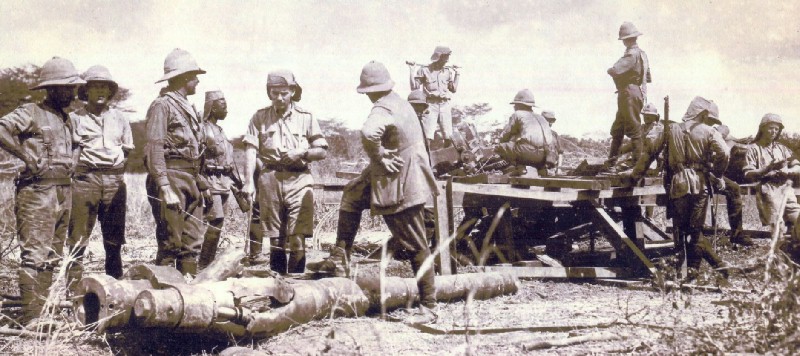
Major-General Hoskins and his staff examining the
Railway Gun Captured at Kahe, March 1916
Photo © Private Collection
Both
of these descriptions of the gun's destruction seem
to match the photographs on this page of the
destroyed gun being separated from its base with a
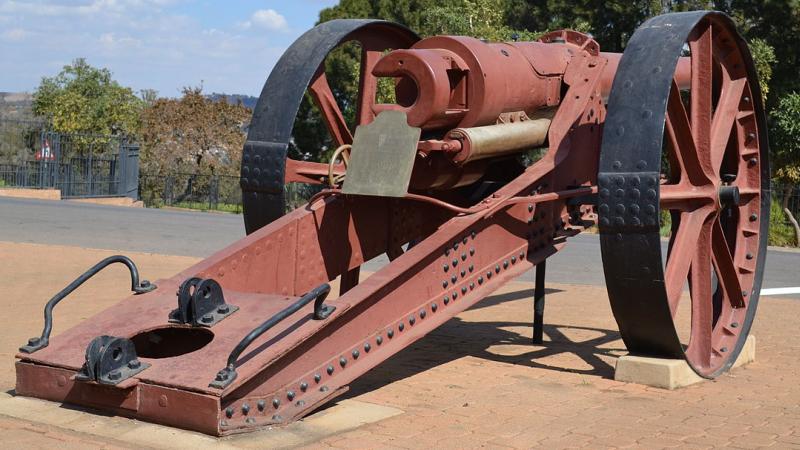
wide split in the barrel. This would seem to rule
out the gun currently on display in Pretoria as
being the same gun captured in Kahe as is stated on
that gun's plaque. This is the root of our first
mystery of the Konigsberg guns, if the gun in
Pretoria wasn't captured at Kahe, then where was it
captured?
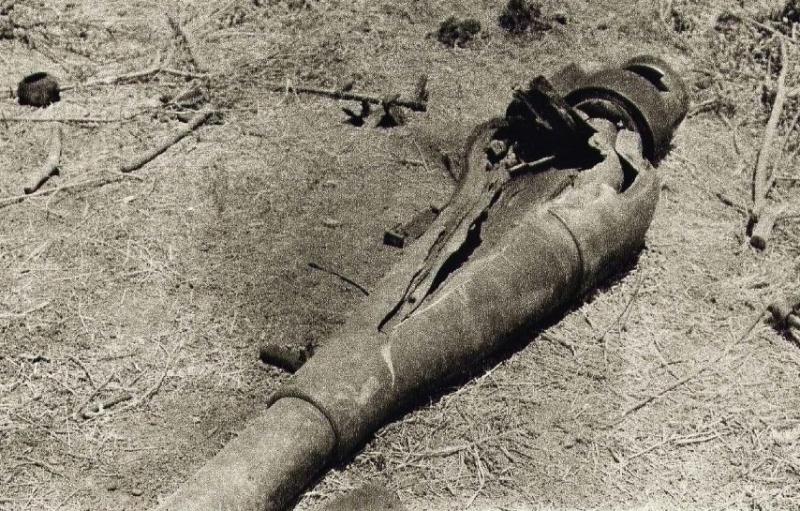
Destroyed Gun Barrel
Captured at Kahe 1916
This photograph clearly shows the split in the
barrel at the breech end while it is lying on the ground
out of its cradle.
Capture and Post-War Display
Soldiers of the British Kings
African Rifles under Brigadier General Arthur Hoskins came across the
torn and twisted remains of the gun and its platform
on the morning of 22 March 1916. It was the first of the Königsberg
guns to fall into allied hands although the damage
done to it by the German dynamiting meant that it
was of no value to the allies except as scrap metal.
Nevertheless, sometime
after the British had captured Dar Es Salaam in
September 1916, the remains of the gun was taken
there to be displayed. The broken barrel was mounted
on a concrete plinth in the grounds of the former
German governor's house which was largely re-built
after its shelling by the British Royal Navy during
the town's capture for the new British Governor. The
former commander of the gun, Werner Schönfeld
described coming across the it on a return trip to
East Africa in the 1920s-
"The
impression I gained of Dar Es Salaam was not
favourable. The gardens which had been so well kept
in German times were now neglected as were the
grounds of the newly built British Governor's
House. Upon turning my attention to the gardens
immediately before the Governors House, I was
attracted by a gun barrel in place there. Coming
closer, I welcomed this long slender barrel. A dear
old friend."
(Quotation
from P174-175
"Geraubtes Land" by Werner
Schönfeld, Alster-Verlag, Hamburg
1927)
Local historian Kevin Patience, described the last
sighting of the gun at the Governor's House in Dar
Es Salaam-
"After standing for over ten years with
nothing to identify it, the governor's secretary
asked Captain Ingles for details and a suitable
plaque was made. Five years later on 22 August 1934
the gun was removed for storage."
(Quotation from P159 "Königsberg- A German East
African Raider" by Kevin Patience, Zanzibar
Publications, Bahrain 1997)
The
gun has not been seen since. It may have been
scrapped or it may simply be rusting in storage or
in a
hedgerow near its former display site. The former
governor's house is now the residence of the
President of Tanzania and is known as State House.
Unfortunately the house and its grounds are not open
to the public.
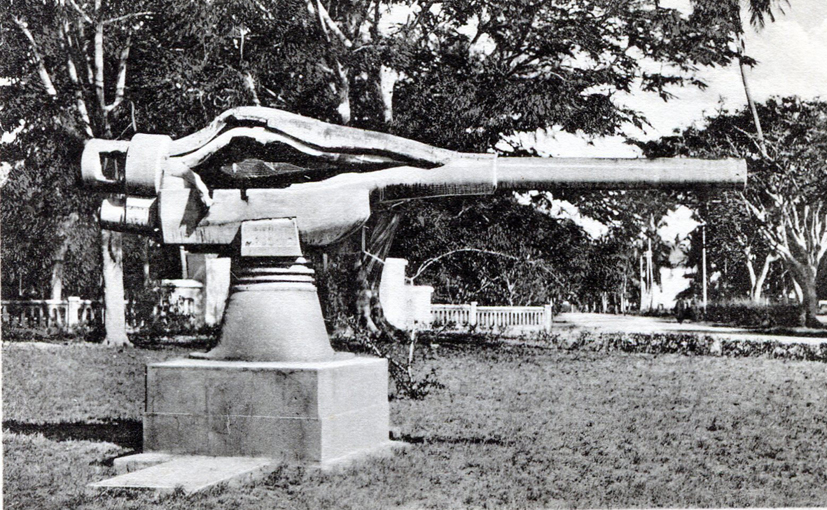
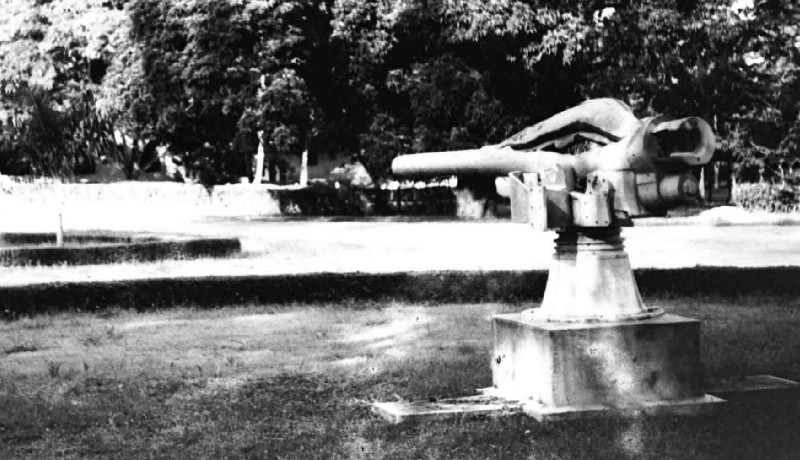
The Kahe Railway Gun Barrel on display in Dar Es
Salaam c1920s-30s
Photo © Kevin Patience
Sources
"Geraubtes
Land" by Werner Schönfeld,
Alster-Verlag, Hamburg 1927
"Kriegserinnerungen aus DOA
1914-1917" by Hermann J Müller, Privately Published
"Die Operationen in Ostafrika im
Weltkrieg 1914-1918" by Ludwig Boell, Verlag Walter
Dachert, Hamburg 1951
"Königsberg- A German East African
Raider" by Kevin Patience, Zanzibar Publications,
Bahrain 1997
"Das Offizierskorps der Schutztruppe für Deutsch-Ostafrika
im Weltkrieg 1914-1918" by
Wolfgang-Eisenhardt Maillard and Jürgen Schröder,
Walsrode 2003
"Army Diary
1899–1926" by Richard Meinertzhagen,
Oliver & Boyd,
Edinburgh 1960
"The First
World War in Africa" by Hew Strachan, Oxford
University Press 2004
"C
Smuts
and JL van Deventer: South African
Commanders-in-Chief of a British Expeditionary
Force' by Ross
Anderson, South African Journal of Military Studies
2003
Kaiser's Cross on the Battle of Kahe
Hoskins information at
1914-1918InvisionzoneForum
Birmingham University biography of General AR
Hoskins
Axis History Forum Discussion on the SMS Königsberg
Guns in English
Panzer Archiv Forum Discussion on the SMS Königsberg
Guns in German
Thanks to MC Heunis,
Kevin Patience and Per Finsted for their additional
help on this page.
|